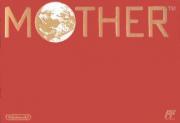
Mother

This review contains spoilers
To revisit Mother (localized as Earthbound Beginnings) in our current digital era is to confront a distinct psychological friction. We are accustomed to games that function as hyper-efficient dopamine dispensers, offering clear waypoints and seamless gratification. Mother, conversely, offers a landscape of immense, often terrifying emptiness. In this 1989 artifact, we find a stark representation of the anxiety of freedom. By dropping a child into a sprawling, pseudo-American open world with minimal direction, the game forces the player to grapple with the very isolation that defines the modern human condition.
The experience is undeniably rough; it creates a specific type of alienation. The mechanics are archaic, the encounter rate is punishing, and the geography is confusing. A modern consumer might look at this through the "marketing orientation"—judging it solely by its exchange value or its ability to entertain effortlessly—and find it wanting. However, if we look through a humanistic lens, these flaws contribute to a profound existential texture. The game does not coddle us with authoritarian direction; it demands we navigate the terrifying openness of the world on our own terms.
Having vs. Being in the gameplay loop
There is a central conflict in Mother between the "Having" mode of existence and the "Being" mode. On the surface, the gameplay is deeply entrenched in "Having." We grind for experience points, we hoard money in ATMs, and we accumulate items to survive. It is a tedious, often capitalist grind that mirrors the repetitive labor of industrial society. We work (fight) to acquire means (levels/money) to survive the next day.
Yet, the narrative arc subverts this accumulation. The protagonist, Ninten, is not tasked with slaying a dragon to steal its hoard, nor is he seeking a crown. His objective is to collect a melody—the Eight Melodies. This is an exercise in "Being." You cannot "have" a song in the same way you have a sword; you must experience it, remember it, and internalize it. The game forces us to trudge through the material drudgery of random encounters to find moments of immaterial connection. The ultimate weapon is not a tangible object of destruction, but a unified memory.
Poltergeists and the pathology of normalcy
The enemies in Mother provide a fascinating look at "technological necrophilia." The threat in the game often comes not from fantastical beasts, but from the corruption of the inanimate and the mundane. Lamps, cars, and dolls become animated with hostility. This is a nightmare of modernity: our objects, which are supposed to serve us, turn against us.
Giygas, the cosmic antagonist, represents the ultimate separation—a consciousness devoid of empathy, capable only of domination. Under his influence, the world loses its "biophilic" (life-loving) nature and becomes dead, mechanical, and aggressive. The horror of Mother is the horror of a world where love has been subtracted, leaving only the cold mechanics of psychic control.
The productive orientation of the ending
In the modern gaming landscape, conflict is almost exclusively resolved through superior force—a domination of the other. Mother rejects this. The final confrontation is structurally unwinnable through violence. To attack the final boss is to fail. Instead, the player must use the "Sing" command.
This is a radical, humanistic statement. Ninten and his companions survive not by destroying the aggressor, but by reminding him of his own capacity for connection (via the figure of Maria/Queen Mary). It posits that the only sane response to the insanity of total alienation is the act of love. It validates the idea that love is not a passive affect, but an active power—an art that requires discipline to wield.
Ultimately, Mother is a flawed vessel for a perfect idea. It is frustrating, obtuse, and occasionally boring. But as a psychological text, it is surprisingly rich. It reminds us that while we are often trapped in the "Having" mode of grinding through a hostile world, our salvation lies in the "Being" mode: the shared melodies that connect us to our history and to one another.
Mini Review: Mother compels us to face the "anxiety of freedom." Its hostile world refuses to coddle, mirroring modern isolation. While the grind enforces a "Having" mode of accumulation, the narrative demands a "Being" mode—seeking immaterial melodies over material wealth. It portrays a nightmare of "technological necrophilia," where everyday objects turn hostile, suggesting that amidst this alienation, salvation lies not in domination, but in the active, productive power of human connection.