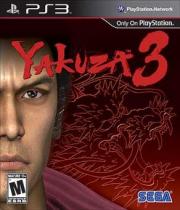

Yakuza 3

This review contains spoilers
To revisit Yakuza 3 in our current era—decades removed from the immediate shock of the 2008 financial crisis in which it was born—is to examine a cultural artifact that understands, perhaps better than its contemporaries, the violence inherent in the "spatial fix." While the broader gaming industry of the late 2000s was obsessed with the acceleration of graphical fidelity and the streamlining of mechanics, Sega’s RGG Studio produced a work that feels deliberately obstructive, rooted in a specific geography of resistance. It is a flawed, uneven text, yet it serves as a profound critique of how capital seeks to resolve its crises by devouring the periphery.
The central narrative engine of Yakuza 3 is not a clan war, but a land deal. The expansion of the Tojo Clan and the machinations of the Japanese government, represented by the Military Base Expansion Bill and the Resort Act, are perfect illustrations of accumulation by dispossession. The capital surplus of Tokyo (Kamurocho), finding itself blocked by saturation and internal stagnation, seeks a "fix" by displacing its problem to Okinawa. Here, the game explicitly links the predatory nature of the Yakuza with the structural violence of the neoliberal state and American imperialism. The villain is not merely a man with a tattoo; the villain is the bulldozer, the resort developer, and the CIA operative ensuring the fluidity of global capital at the expense of local populations.
We must look at the geography of the game itself. The shift from the suffocating, neon-drenched density of Kamurocho to the sun-bleached, slower pacing of the Morning Glory Orphanage in Ryukyu is a masterclass in uneven geographical development. In Kamurocho, time is compressed; space is commodified to the inch. In Ryukyu, the game forces the player to engage in social reproduction—caring for children, fishing, engaging in the unmasked labor of community maintenance.
Many modern critics decry the game’s pacing—the so-called "orphanage chapters"—as a drag on the momentum of the action. However, viewed through a historical-materialist lens, this friction is the point. The "sluggishness" of Ryukyu is the resistance of the local against the velocity of global capital. Kiryu Kazuma’s refusal to sell the land is a rejection of the exchange-value of the orphanage in favor of its use-value. He is fighting for a "right to the city" (or in this case, the coastline) that prioritizes human flourishing over the logic of the resort economy.
Furthermore, the combat mechanics—often criticized for the enemies’ excessive blocking and the "chip damage" nature of fights—mirror the political reality of the era. The enemies in Yakuza 3 do not open themselves up to be easily consumed; they represent the entrenched, defensive nature of a system protecting its assets. The player cannot simply accelerate through these encounters; they must engage in a grueling, dialectical struggle of attrition. It is a gameplay loop that refuses the instant gratification of the neoliberal consumer, demanding instead a labor-intensive engagement with the opposition.
Ultimately, Yakuza 3 stands as a crucial, if somewhat clunky, document of the transition into our current stage of late capitalism. It exposes the collusion between the illegitimate violence of the underworld and the "legitimate" violence of the state-corporate nexus. The game’s resolution suggests that while the individual (Kiryu) can momentarily halt the bulldozer, the structural pressures of capital accumulation remain. It is a rough-hewn, imperfect work, but in its dedication to the geography of the margin, it offers a radical spatial critique that resonates far beyond its virtual borders.
The central narrative engine of Yakuza 3 is not a clan war, but a land deal. The expansion of the Tojo Clan and the machinations of the Japanese government, represented by the Military Base Expansion Bill and the Resort Act, are perfect illustrations of accumulation by dispossession. The capital surplus of Tokyo (Kamurocho), finding itself blocked by saturation and internal stagnation, seeks a "fix" by displacing its problem to Okinawa. Here, the game explicitly links the predatory nature of the Yakuza with the structural violence of the neoliberal state and American imperialism. The villain is not merely a man with a tattoo; the villain is the bulldozer, the resort developer, and the CIA operative ensuring the fluidity of global capital at the expense of local populations.
We must look at the geography of the game itself. The shift from the suffocating, neon-drenched density of Kamurocho to the sun-bleached, slower pacing of the Morning Glory Orphanage in Ryukyu is a masterclass in uneven geographical development. In Kamurocho, time is compressed; space is commodified to the inch. In Ryukyu, the game forces the player to engage in social reproduction—caring for children, fishing, engaging in the unmasked labor of community maintenance.
Many modern critics decry the game’s pacing—the so-called "orphanage chapters"—as a drag on the momentum of the action. However, viewed through a historical-materialist lens, this friction is the point. The "sluggishness" of Ryukyu is the resistance of the local against the velocity of global capital. Kiryu Kazuma’s refusal to sell the land is a rejection of the exchange-value of the orphanage in favor of its use-value. He is fighting for a "right to the city" (or in this case, the coastline) that prioritizes human flourishing over the logic of the resort economy.
Furthermore, the combat mechanics—often criticized for the enemies’ excessive blocking and the "chip damage" nature of fights—mirror the political reality of the era. The enemies in Yakuza 3 do not open themselves up to be easily consumed; they represent the entrenched, defensive nature of a system protecting its assets. The player cannot simply accelerate through these encounters; they must engage in a grueling, dialectical struggle of attrition. It is a gameplay loop that refuses the instant gratification of the neoliberal consumer, demanding instead a labor-intensive engagement with the opposition.
Ultimately, Yakuza 3 stands as a crucial, if somewhat clunky, document of the transition into our current stage of late capitalism. It exposes the collusion between the illegitimate violence of the underworld and the "legitimate" violence of the state-corporate nexus. The game’s resolution suggests that while the individual (Kiryu) can momentarily halt the bulldozer, the structural pressures of capital accumulation remain. It is a rough-hewn, imperfect work, but in its dedication to the geography of the margin, it offers a radical spatial critique that resonates far beyond its virtual borders.
Mini Review: Yakuza 3 functions as a digital critique of "accumulation by dispossession." The central conflict—a land grab threatening an Okinawa orphanage—illustrates the violence of the "spatial fix," where stagnant capital seeks release by devouring the periphery. The shift from hyper-urban Kamurocho to rural Ryukyu highlights uneven geographical development. Kiryu’s struggle is not merely criminal, but a defense of use-value against exchange-value, rejecting the neoliberal commodification of space.
Watch the Trailer