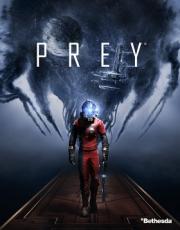

Prey

Prey should have been considered one of the best RPG's released in the last few decades, it's now obvious that Bethesda's constant meddling with Arkane's development is a prime example of how the 'business executive' mindset can utterly ruin the reception of a product they have no hand in creating. Forcing the reuse of the name 'Prey' to imply a connection with the 2006 game just screams "I made a bad move buying the rights to this name, now my lackies have to figure out a way to fix my mistake." The only actual similarities are that there are alien enemies, and you use a wrench as your melee weapon.
Graphically the game both looks fantastic and runs smoothly, aiming for a clearly defined art direction rather than dating itself trying to achieve photo-realistic graphics. Character design will be immediately familiar to anyone who has played other Arkane games, although they have wisely toned down their trademark oversized hands and heads. I was a little disappointed in the variety of enemies, though they're well designed in general each enemy type has several variants but it can often be hard to tell from a distance which variant you're dealing with until they actually start attacking; which can be frustrating considering they can have entirely different weaknesses and attack styles.
World design is outstanding, with the Talos 1 station initially taking clear inspiration from Bioshock's Rapture. Both are artificially created habitats, deliberately placed in unusual and dangerous locations for the express purpose of being outside regular govenment control, and built with unrestrained capitalism and unethical scientific progress as explicit goals. As you progress further within the game the stations design changes to reflect the lore backstory. While the inital lobby and corporate areas are designed like a high-class Art Deco hotel from the 70's, the older 'maintenance' sections feel decidedly more stark and brutalist; showcasing the original Russian style as they supposedly built much of the original station before selling it on.
Audio is used to great effect throughout, weapons and explosions are both sharp and satisfying, enemy chatter and sound effects alert the player well but also raise the tension and weirdness of the encounters. They desperately needed to record another 50 or so enemy lines however, you *will* get sick of hearing "They want to live inside us, like some kind of disease." Music is used sparingly, but appropriately. Despite having several fantastic tracks and also Mick Gordon onboard the dev's restrain actual music to key events, and usually in moments of relative peace and safety so you can actually enjoy and appreciate it more. Voice acting in general is of high quality and never feels boring or overwhelming, which is ideal considering that 90% of the plot is detailed exclusively via audio transcripts you find around the station.
The attempt to create a world where objectives can be achieved via multiple routes has been largely successful, but in general this usually results in 'main plot' rooms having a locked door you can hack, a window you can smash, a vent you can climb through, and a secondary door blocked by junk you can lift out of the way; since the devs must account for a player with any combination (or lack) of skills / powers being able to enter in order to proceed. This is contrasted starkly by the dozen or so (non-plot relevant) rooms throughout the station that are simply inaccessibile unless you choose to take the right powers to get inside. There are a variety of secondary quests the player is more or less free to follow at their leisure, however since these aren't given any particular plot focus it can be easy to leave these until near the end of the game, even though many offer rewards that would be especially helpful early on.
Combat is pleasingly challenging right from the start, the player is given a variety of weapons early doors, but will not have enough ammo to exclusively use guns for every fight. There is a strong focus on the use of environmental objects (even just throwing heavy items like crates) timing an inital surprise attack or stun, and researching enemy types to find their weaknesses. In general this continues throughout the game, although by the time you reach the final 20% or so the player will have become far more powerful than most foes, and can easily clear rooms without much planning. The neuromod ability system is designed so that it is essentially impossible to have *all* powers in one playthrough, forcing you to choose which abilities you want most; and more crucially choosing between offensive combat powers or utility abilities. However, as there are plot related reasons why you can't remove a neuromod, this also means you can't refund a purchase or change your mind (without save-scumming at least), this can be very dissatisfying as some of the more expensive abilities can be surprisingly ineffective, and really aren't worth the cost of acquiring them.
Plotline and overall story are well written and presented, but follow a generally well trodden path in terms of 'scientists did things they shouldn't have' tropes and structures. It's explicitly mentioned several times that the main alien enemies in the game have no emotions, are biologically driven to kill any terrestrial life they find, and are physiologically incapable of feeling empathy for another being. There are no Ender's Game style revelations here, they exist solely as mindless terrors to be destroyed. Roughly 75% into the game a forced event sees 'the company' send a previously unnamed employee (presumably a military contractor) onto the station, with orders to kill everyone alive and recover all research. This feels straight out of left field, as previous to this you've been under the assumption that no-one outside the station even knows anything is wrong. This 'new threat' is dealt with hilariously easily, and then completely ignored again as you basically continue with what you were doing before.
Overall an excellent game, that clearly had a lot of love and effort poured into it by the development team, and should have been the setup for a great new IP and series. Unfortunately being released the same year as both PuBG and Breath of the Wild, as well as Bethesda deliberately hamstringing them via bad marketing meant this slipped under the radar for most, and will likely only ever been seen as a cult classic now.
Graphically the game both looks fantastic and runs smoothly, aiming for a clearly defined art direction rather than dating itself trying to achieve photo-realistic graphics. Character design will be immediately familiar to anyone who has played other Arkane games, although they have wisely toned down their trademark oversized hands and heads. I was a little disappointed in the variety of enemies, though they're well designed in general each enemy type has several variants but it can often be hard to tell from a distance which variant you're dealing with until they actually start attacking; which can be frustrating considering they can have entirely different weaknesses and attack styles.
World design is outstanding, with the Talos 1 station initially taking clear inspiration from Bioshock's Rapture. Both are artificially created habitats, deliberately placed in unusual and dangerous locations for the express purpose of being outside regular govenment control, and built with unrestrained capitalism and unethical scientific progress as explicit goals. As you progress further within the game the stations design changes to reflect the lore backstory. While the inital lobby and corporate areas are designed like a high-class Art Deco hotel from the 70's, the older 'maintenance' sections feel decidedly more stark and brutalist; showcasing the original Russian style as they supposedly built much of the original station before selling it on.
Audio is used to great effect throughout, weapons and explosions are both sharp and satisfying, enemy chatter and sound effects alert the player well but also raise the tension and weirdness of the encounters. They desperately needed to record another 50 or so enemy lines however, you *will* get sick of hearing "They want to live inside us, like some kind of disease." Music is used sparingly, but appropriately. Despite having several fantastic tracks and also Mick Gordon onboard the dev's restrain actual music to key events, and usually in moments of relative peace and safety so you can actually enjoy and appreciate it more. Voice acting in general is of high quality and never feels boring or overwhelming, which is ideal considering that 90% of the plot is detailed exclusively via audio transcripts you find around the station.
The attempt to create a world where objectives can be achieved via multiple routes has been largely successful, but in general this usually results in 'main plot' rooms having a locked door you can hack, a window you can smash, a vent you can climb through, and a secondary door blocked by junk you can lift out of the way; since the devs must account for a player with any combination (or lack) of skills / powers being able to enter in order to proceed. This is contrasted starkly by the dozen or so (non-plot relevant) rooms throughout the station that are simply inaccessibile unless you choose to take the right powers to get inside. There are a variety of secondary quests the player is more or less free to follow at their leisure, however since these aren't given any particular plot focus it can be easy to leave these until near the end of the game, even though many offer rewards that would be especially helpful early on.
Combat is pleasingly challenging right from the start, the player is given a variety of weapons early doors, but will not have enough ammo to exclusively use guns for every fight. There is a strong focus on the use of environmental objects (even just throwing heavy items like crates) timing an inital surprise attack or stun, and researching enemy types to find their weaknesses. In general this continues throughout the game, although by the time you reach the final 20% or so the player will have become far more powerful than most foes, and can easily clear rooms without much planning. The neuromod ability system is designed so that it is essentially impossible to have *all* powers in one playthrough, forcing you to choose which abilities you want most; and more crucially choosing between offensive combat powers or utility abilities. However, as there are plot related reasons why you can't remove a neuromod, this also means you can't refund a purchase or change your mind (without save-scumming at least), this can be very dissatisfying as some of the more expensive abilities can be surprisingly ineffective, and really aren't worth the cost of acquiring them.
Plotline and overall story are well written and presented, but follow a generally well trodden path in terms of 'scientists did things they shouldn't have' tropes and structures. It's explicitly mentioned several times that the main alien enemies in the game have no emotions, are biologically driven to kill any terrestrial life they find, and are physiologically incapable of feeling empathy for another being. There are no Ender's Game style revelations here, they exist solely as mindless terrors to be destroyed. Roughly 75% into the game a forced event sees 'the company' send a previously unnamed employee (presumably a military contractor) onto the station, with orders to kill everyone alive and recover all research. This feels straight out of left field, as previous to this you've been under the assumption that no-one outside the station even knows anything is wrong. This 'new threat' is dealt with hilariously easily, and then completely ignored again as you basically continue with what you were doing before.
Overall an excellent game, that clearly had a lot of love and effort poured into it by the development team, and should have been the setup for a great new IP and series. Unfortunately being released the same year as both PuBG and Breath of the Wild, as well as Bethesda deliberately hamstringing them via bad marketing meant this slipped under the radar for most, and will likely only ever been seen as a cult classic now.
Mini Review: Prey should have been considered one of the best RPG's released in the last few decades, it's now obvious that Bethesda's constant meddling with Arkane's development is a prime example of how the 'business executive' mindset can utterly ruin the reception of a product they have no hand in creating. Forcing the reuse of the name 'Prey' to imply a connection with the 2006 game just screams "I made a bad move buying the rights to this name, now my...
Watch the Trailer