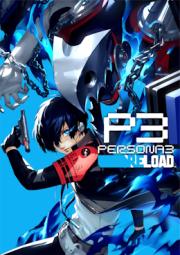

Persona 3 Reload

This review contains spoilers
The Gun to the Temple: Persona 3 Reload and the Only Question Worth Asking
There is a gesture at the heart of Persona 3 Reload so brazen, so philosophically loaded, that one wonders how it slipped past a generation of critics content to call the game "moody" or "melancholic." A teenager raises a silver pistol — the Evoker — presses it to his temple, and pulls the trigger. What emerges is not blood but a soul. The act of simulated suicide is the precondition for power. To summon the self, you must first rehearse its annihilation.
This is not edginess. This is not even metaphor in the lazy sense. This is the central question of modern philosophy dramatized as a combat mechanic: whether life, confronted honestly with its own absurdity, is worth living. Atlus answers, through every system and story beat of this 2024 remake, with a clarity that puts most "serious" art to shame. You decide to live by aiming the weapon at yourself and choosing, instead, to fight.
Consider the world the game gives us. Iwatodai is a city quietly bleeding out. Beneath the surface of its convenience stores and karaoke booths and exam-cram sessions, a sickness called Apathy Syndrome turns citizens into "the Lost" — drooling husks staring at nothing, having decided, in some unreachable interior chamber, that nothing is worth doing. This is the most precise rendering of philosophical suicide ever committed to a video game. Not the messy physical kind, but the surrender that happens when a person looks at the wallpaper of their existence and concludes there is no reason to peel themselves off the bench. The Lost have not died. They have done something worse: they have agreed with the void.
Against this, the game offers no theological consolation. The Dark Hour — that twenty-fifth hour stitched into the seam of every midnight — is the absurd made literal. The world stops. Coffins line the streets where people stood a moment ago. The familiar reveals itself as a thin film over something monstrous and indifferent. Persona 3 understands what most stories about cosmic horror do not: that the horror is not the monsters. The horror is that the monsters have been there all along, and you simply organized your life so as not to see them.
The members of SEES — the high-school strike team that fights through the nightly tower of Tartarus — are not heroes in any classical sense. They are not chosen. They are not promised victory. They are, for most of the game, mistaken about the very nature of what they're fighting. When the truth arrives in the back half of the story, it lands with the weight of a doctrine: defeating the twelve Shadows will not save the world. It will hasten the Fall. The boss they have been hunting is not a final boss but a delivery mechanism for Nyx — Death itself, summoned by humanity's own collective wish to stop existing. The struggle has been, in a precise and crushing sense, meaningless.
This is the moment the game becomes great. Ryoji, the human face of death, offers our protagonist a kindness: he will erase everyone's memory of the truth. They can spend their final weeks in blissful ignorance, eating ramen, going to the beach, dying without knowing they are dying. The mercy of forgetting. The narcotic of false hope. Every consoling philosophy and comfortable religion ever invented, condensed into a single dialogue choice.
You refuse it. Or rather — and this is the game's quiet genius — you are _allowed_ to refuse it, and the narrative weight of the entire work bends toward that refusal as the only response worthy of a conscious being. Lucidity is not optional for those who have glimpsed the absurd. Once you have seen the coffin standing where your classmate stood, you cannot unsee it. To choose forgetting would be to become one of the Lost by another route — apathy dressed up as serenity.
What follows is what I would call the most quietly devastating final act in the medium. SEES knows. They know they are going to lose. They know that fighting Nyx is, on every reasonable accounting, futile. And they fight anyway, not because they expect to win but because the fight itself is the meaning. They are the doctors of the plague city, going from house to house knowing the bacillus cannot be defeated, only resisted, person by person, night by night. There is no "ending the disease." There is only the work of refusing to consent to it.
And then there is the Seal.
The protagonist's final act — to become the barrier between humanity and its own death-wish, pinned to the gate of the cosmos for as long as he can hold — is Sisyphus reframed. Not the rock and the hill imposed by punitive gods, but a burden taken up freely, with eyes open, by someone who could have chosen oblivion. The protagonist does not save the world by defeating death. Death cannot be defeated. He saves it by standing in the way, an act that must be renewed eternally, an act that guarantees no rest. The boulder will roll. He will push it. He smiles, the final cutscene insists, at the moment of his sacrifice — and we should take this smile seriously rather than sentimentally. It is the smile of a person who has understood the terms of existence and decided to live them out without flinching.
The genius of Reload — and credit where it's due, the 2024 version's pacing and presentation sharpens this enormously — is that it pairs this cosmic argument with the smallest possible texture. The Social Links. The afternoons spent listening to a lonely old monk, a dying classmate, a girl whose mother won't look at her. The game's thesis emerges not just from the apocalyptic finale but from the granular accumulation of these encounters, each one a small refusal of apathy, each one a person choosing to be seen by another person in a universe that does not see them. This is the humanism that survives the death of cosmic meaning: the meaning we manufacture, locally, with our hands and our attention, in the time we have.
What's striking, sitting with Reload in 2024, is how badly we needed it back. We live in a culture saturated with Apathy Syndrome by other names — doomscrolling, dissociation, the quiet conviction among the young that the future is a closed door. The game's diagnosis is not dated; it is, if anything, sharper now than when the original released in 2006. And its prescription — lucidity, solidarity, the chosen burden, the refusal to consent to one's own dissolution — remains the only prescription that has ever worked.
Press the Evoker to your temple. Pull the trigger. What comes out is not death but the part of you capable of fighting it. The game is telling you something. It has been telling you for nearly twenty years. It is, perhaps, time to listen.
Mini Review: Persona 3 Reload hides the ultimate philosophical question inside a combat mechanic. Characters press guns—Evokers—to their heads not to die, but to rehearse annihilation and summon the will to live. Set against a city dying of "Apathy Syndrome"—a chilling mirror to our own era's doomscrolling—the game asks if life, facing its own absurdity, is worth living. Its answer is a profound, defiant humanism: we manufacture our own meaning, fighting the void through the everyday bonds we forge.
More Reviews of Persona 3 Reload
Watch the Trailer